
Trichotillomania Support in Michigan
Find a therapist in Michigan who understands trichotillomania. Whether you pull your own hair or you’re supporting a child or someone you love, search by city or town, from Marquette to Detroit, for someone near you, or choose Online to see who works with people anywhere in Michigan.
Find a therapist for trichotillomania in Michigan
Getting to someone who understands hair pulling can mean a long drive in Michigan. The Upper Peninsula covers about 29% of the state’s land but holds only 3% of its people. Finding someone who understands hair pulling, wherever you live, is the reason this directory exists.
The directory includes therapists, counselors, psychologists, CBT therapists, occupational therapists, hypnotherapists, EFT and NLP practitioners, and BFRB coaches. BFRB stands for body-focused repetitive behavior, the group that includes hair pulling and skin picking. Every listing shows how the person works, whether they see people in person or online, what they charge, and has a private contact form. From Monroe to Marquette, online sessions mean your zip code doesn’t decide who you can work with.
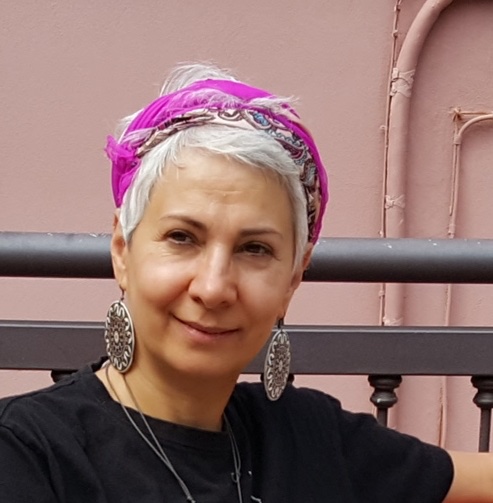
Maryam Forozmand
Jungian Analyst
Vienna, Virginia
Works with: adultsFrom $175View profile →
Adria Hagg
CBT Therapist (LMSW, LCSW)
Northville, Michigan
Works with: adultsFrom $185View profile →
Amy Windschitl
Psychotherapist
Broomfield, Colorado
Works with: teens · adultsFrom $185View profile →- More practitioners are being added — see online options
Frequently Asked Questions about Trichotillomania in Michigan
Find a TherapistHow do I find a trichotillomania therapist near me in Michigan?›
Search the directory by your city or town, or choose Online to see people who work with clients anywhere in Michigan. Every listing shows how the person works, whether they see people in person or online, what they charge, and has a private contact form.
Can I have sessions online from anywhere in Michigan?›
Yes. Anyone licensed in Michigan can see you online wherever you live in the state, from Detroit to the Upper Peninsula. Many licensed psychologists in other states can also work with Michiganders online. EFT practitioners and coaches aren’t bound by these rules.
How much does trichotillomania therapy cost in Michigan?›
Private sessions usually cost $100–$200, with around $150 typical. Prices run highest around Ann Arbor and the Detroit suburbs. Every listing shows its own prices, and many people offer a free first call.
What kinds of help are there for hair pulling in Michigan?›
Therapists, counselors, psychologists, CBT therapists, occupational therapists, hypnotherapists, EFT and NLP practitioners, and BFRB coaches all help people who pull. Different people find different things helpful. What they share here is that they understand hair pulling.
Do I need a doctor’s note or a diagnosis to get help in Michigan?›
No. You can contact anyone listed in the directory directly, without a doctor’s note and without a diagnosis. Just say you pull your hair and want someone who understands trichotillomania.
My child pulls their hair. What do I do first?›
Stay steady and don’t tell them off; pressure and punishment reliably make pulling worse. Read The Parent’s Guide to Trichotillomania to understand what your child is going through. Then look for someone whose listing says they work with children and teens.
Are there trichotillomania support groups in Michigan?›
We haven’t confirmed an in-person hair pulling group in Michigan yet. The IOCDF lists online BFRB groups you can join from anywhere, and NAMI Michigan affiliates run free groups for related conditions and families. If you run one, tell us and we’ll list it for free.
How common is hair pulling in Michigan?›
Trichotillomania affects about 1 in 50 people, which means more than 100,000 Michiganders. It usually starts around ages 10–13 but can begin at any age. It’s a recognized condition in the DSM-5. Read our complete guide to trichotillomania.
How to get in touch with a therapist
You can contact anyone listed here directly, today. You don’t need a doctor’s note or a diagnosis. Use the private contact form on their listing and say what it is: “I pull my hair. I’m looking for someone who understands trichotillomania.” Plain words like that keep you from being steered toward general stress work.
Most private practices in Michigan sit in Metro Detroit, Ann Arbor, Grand Rapids, Lansing and Kalamazoo. North of Grand Rapids and across the Mackinac Bridge, practices thin out fast. In the Upper Peninsula, online sessions are often the most realistic option.
Michigan has joined the agreement that lets many licensed psychologists in other member states work with Michiganders online. A similar agreement for counselors passed the Michigan House in 2025 but isn’t law yet. Hypnotherapists, EFT practitioners and coaches aren’t bound by these licensing rules.
Your insurer, Medicaid plan or county community mental health agency can also connect you with someone. That route exists, but it often takes longer, and you usually can’t choose someone who understands hair pulling.
How to choose who to work with
People who pull find help from many directions: therapists, counselors, psychologists, hypnotherapists, EFT and NLP practitioners, occupational therapists and coaches. Different people find different things helpful. What matters is that the person understands hair pulling and that you feel at ease with them.
To check a licensed clinician, use the free Verify a License search from Michigan’s Department of Licensing and Regulatory Affairs (LARA). It covers psychologists, counselors (LPC), social workers (LMSW) and marriage and family therapists (LMFT). Michigan also licenses master’s-level psychologists under its own title, Limited Licensed Psychologist (LLP). Hypnotherapy, EFT, NLP and coaching aren’t licensed by the state, and practitioners belong to their own associations instead.
Everyone on this site has one thing in common: they’ve told us they understand hair pulling. On a first call, you can ask:
- Have you helped people who pull their hair before?
- How do you work? What happens in the first few sessions?
- What if I feel it isn’t right for me?
Charities and groups in Michigan
Michigan has no charity just for hair pulling right now. A volunteer-run branch of the International OCD Foundation covers Michigan and three neighboring states, and these organizations can help today.
International OCD Foundation (IOCDF)
The main US home for BFRB support, including hair pulling and skin picking. It runs online events and keeps a list of support groups, including groups for people who pull.
OCD Midwest
The IOCDF’s volunteer-run branch for Michigan, Illinois, Indiana and Ohio. Its focus is OCD, but it welcomes people with related conditions and their families.
NAMI Michigan
The Michigan branch of the National Alliance on Mental Illness, based in Lansing, with local affiliates around the state. It runs free peer and family support groups and classes. It isn’t focused on hair pulling, but it helps with the anxiety and low mood that often come with it.
Mental Health Association in Michigan
Founded in 1937, it’s the state’s oldest nonprofit working across mental health, and the Michigan affiliate of Mental Health America. It’s a useful place to learn about services and rights in Michigan.
988 and the Michigan Crisis & Access Line
Call or text 988 at any time if distress turns into a crisis. In most of Michigan, calls are answered by the state’s own Michigan Crisis & Access Line, 24 hours a day.
Support groups in Michigan
Most groups for people who pull meet online right now. We haven’t been able to confirm an in-person hair pulling group in Michigan. Here’s what we can confirm:
- IOCDF groups: the IOCDF’s support group directory lists BFRB groups, and many meet online, so you can join from anywhere in the state.
- NAMI Michigan groups: local affiliates run free peer and family groups. They aren’t about hair pulling, but they welcome anyone living with a mental health condition and their families.
- OCD Midwest: ask about its online talks and family support, and whether hair pulling fits.
For parents: watching your child pull is hard. The Parent’s Guide to Trichotillomania helps you understand what your child is going through.
Do you run a Michigan group? Tell us and we’ll list it for free.
The pull-and-relief cycle
Many people who pull describe the same loop. It starts with a feeling before any hair is touched. That might be tension, an itch at the root, restlessness, or a hair that feels coarse or out of place.
Pulling brings a moment of release. The tension drops, or a small sense of “that’s better” arrives. Some people then look at the hair, run it across their lips, or feel the root between their fingers.
The relief doesn’t last. Soon after comes the other half of the loop: frustration and embarrassment. Then a close look in the mirror at the gap in a brow or a thin patch. Those feelings raise the tension again, and the next urge often follows sooner.
This is why pulling can carry on even when someone badly wants it to stop. The loop runs on relief, not on a lack of willpower. It isn’t a bad habit, attention-seeking or self-harm.
Many people find that simply naming the stages helps them describe what happens: what comes before, what the pull feels like, what follows. That’s often where a first conversation with someone who understands hair pulling begins.
About this page
Sources: Michigan Department of Licensing and Regulatory Affairs (PSYPACT information, psychology license types, Verify a License); Michigan Legislature (House Bill 4591 of 2025); International OCD Foundation (including OCD Midwest and its support group directory); NAMI Michigan; Mental Health Association in Michigan; Michigan Department of Health and Human Services and Bridge Michigan (988 and the Michigan Crisis & Access Line); Michigan Center for Data and Analytics (2025 population estimate); State of Michigan economist presentation on the Upper Peninsula (Minneapolis Fed, 2020); published Michigan therapy cost data (2026).
Things change. We check this page often, but always check prices and qualifications with the person you contact. This page is information, not medical advice.
Are you a Michigan therapist or practitioner who works with trichotillomania?
Be found by people looking for help with hair pulling across Michigan, in person or online.
About Michigan
Michigan is the Great Lakes State, split into two peninsulas joined by the Mackinac Bridge. It is the only state that touches four Great Lakes: Superior, Michigan, Huron and Erie. Its 3,288 miles of shoreline are the most freshwater coast of any US state.
Detroit, the largest city, was founded in 1701 and became the center of the American car industry. It’s also where Berry Gordy started Motown in 1959. Grand Rapids, the second-largest city, earned the name “Furniture City”. Ann Arbor is home to the University of Michigan, and East Lansing to Michigan State University. Lansing has been the capital since 1847. Traverse City has held the National Cherry Festival since 1926. Isle Royale National Park lies out in Lake Superior, off the Upper Peninsula.
Attractions in Michigan
Michigan pairs a major art museum and a five-mile bridge with dunes and painted cliffs on its Great Lakes shores. These five are spread across the state.
Detroit Institute of Arts, Detroit
Founded in 1885, the museum moved into its Beaux-Arts building on Woodward Avenue, designed by Paul Cret, in 1927. It holds more than 65,000 works. Diego Rivera painted his Detroit Industry murals across all four walls of Rivera Court in 1932–33. They are a National Historic Landmark.
Frederik Meijer Gardens & Sculpture Park, Grand Rapids
Opened in 1995, the gardens cover 158 acres, including a 30-acre sculpture park. Nearly 300 sculptures include works by Rodin and Louise Bourgeois. The American Horse, 24 feet tall, is based on Leonardo da Vinci’s design for the Duke of Milan. The five-story Lena Meijer Tropical Conservatory is Michigan’s largest.
Sleeping Bear Dunes National Lakeshore, near Empire
Protected as a national lakeshore in 1970, these dunes rise about 460 feet above Lake Michigan. The 7.4-mile Pierce Stocking Scenic Drive loops to overlooks above the water. An Anishinaabe legend tells of a mother bear waiting on the shore for two cubs, who became the North and South Manitou Islands.
Mackinac Bridge, Mackinaw City to St. Ignace
Opened on November 1, 1957, the bridge links Michigan’s two peninsulas across the Straits of Mackinac. Engineer David B. Steinman designed it. It runs five miles end to end, and its bridge authority calls it the longest suspension bridge in the Western Hemisphere.
Pictured Rocks National Lakeshore, Munising
In 1966 this became America’s first national lakeshore, stretching more than 40 miles along Lake Superior. Sandstone cliffs rise up to about 200 feet above the water. Minerals seeping through the rock stain them red and orange from iron, blue and green from copper, and white from limonite. Its landmarks include Miners Castle.
Browse by state
- Alabama
- Alaska
- Arizona
- Arkansas
- California
- Colorado
- Connecticut
- Delaware
- Florida
- Georgia
- Hawaii
- Idaho
- Illinois
- Indiana
- Iowa
- Kansas
- Kentucky
- Louisiana
- Maine
- Maryland
- Massachusetts
- Michigan
- Minnesota
- Mississippi
- Missouri
- Montana
- Nebraska
- Nevada
- New Hampshire
- New Jersey
- New Mexico
- New York
- North Carolina
- North Dakota
- Ohio
- Oklahoma
- Oregon
- Pennsylvania
- Rhode Island
- South Carolina
- South Dakota
- Tennessee
- Texas
- Utah
- Vermont
- Virginia
- Washington
- West Virginia
- Wisconsin
- Wyoming
- Washington DC